
The Flower of Life
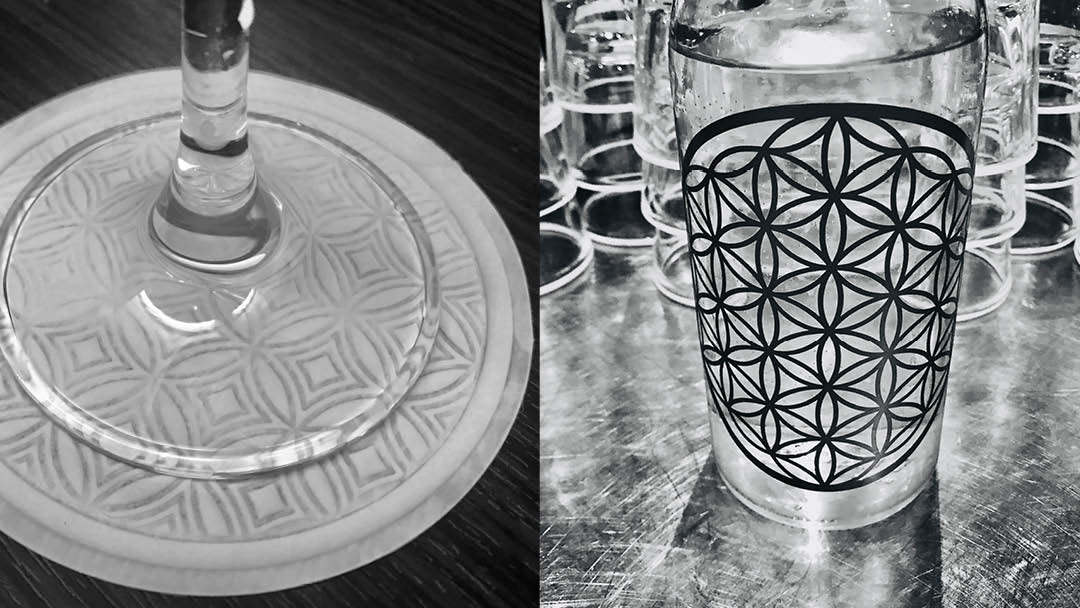
I travelled late last year to attend a fascinating conference, called Wyrd, on science and consciousness at the beautiful Broughton Hall* in Skipton, Yorkshire. The conference was titled Wyrd. https://gowyrd.org/. I learned all sorts of ‘stuff’, other ‘stuff’ went over my head and some of it verified ‘stuff’ already in my head that I had felt was true but had not, previously, found the proof.
I was curious on my journey to note two applications of a powerful sacred symbol, the flower of life. It is one of the most well-known sacred geometric symbols and found in many different cultures and traditions. Some believe that it represents the unity and interconnectedness of everything from life to death and rebirth, the source of the universe, which was created with a geometric plan, and it holds the key to unlocking higher states of consciousness and enlightenment.
Both Qatar Air, and Broughton Sanctuary, https://broughtonsanctuary.co.uk tap into the Flower of Life. Both are delivering to us, whether deliberately or not, the dynamics of the symbol via its proximity to a liquid which creates an effect we can ingest. Whether it is applied to a drink coaster to impact the liquid placed on it, or directly applied to a water container, the liquid gets the message and delivers it. For more on how this works look at Masaru Emoto’s work. And you can buy similar coasters, glasses and flasks on-line all promising to enhance our water quality and raise our consciousness.
Are Qatar and Broughton Sanctuary tapping into the sacred interconnectedness of the universe? What do they hope to gain and how can we benefit from knowing more about this?
If you want to know more about the power of symbols and logos, and how to use them for yourself, my Future Magnets course explores this and so much more. Learn how we can all tap into this resource to affect our futures. Find out more here: https://bit.ly/4enPTPQ
As an aside, I believe in the effectiveness of potentising water in this way, and have experienced it first hand. It inspired me to create my own set of coasters, art inspired by the messages I receive, in waters I have visited and expressed in a way that they can be passed on for benefit. They are free to download from my website. https://lorastarling.com/coasters/
*The Broughton Hall Estate has been home to the Tempest family for over 900 years and enjoys a rich history stretching back to 1097. Roger Tempest, the current custodian is the 32nd and his daughter, the first female to inherit this the estate, will be the 33rd. Those with an interest in numerology will appreciate the significance of that.
Whose design is it anyway?
 When I was asked to write about design trends for 2020, my immediate response was to delve into my many years of design experience, observe any cycles, for example in colour, typography, shapes and so on …
VW Logo, Love it or Hate it
I met a girl with a VW logo on her foot and she answered, when I questioned why, that she loved her VW. I wonder if her love faded when she learned that VW had fitted 11m cars worldwide with software …
Who owns the crocodile?
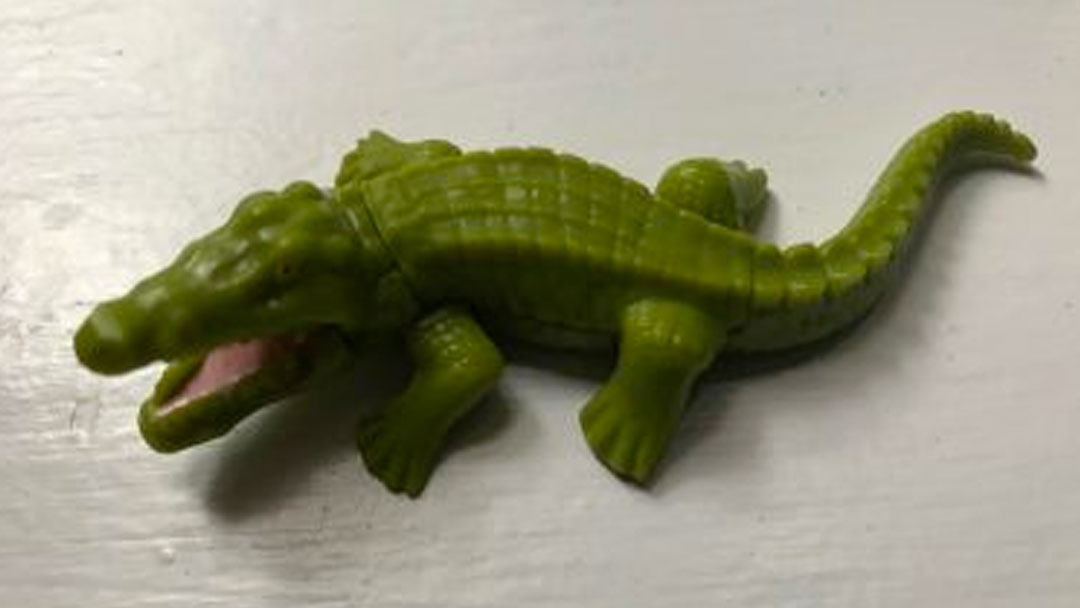
Lacoste and Crocodile International became locked into battle in New Zealand when they both wanted to use the crocodile to identify their brand. Their crocodiles look fairly similar but Lacoste’s …
What blocks us?
 Sometimes making choices about the direction of our lives is not easy. Through a logo design we can clarity our intention and pave the way to the future we want …
Can logos make us rich?
We buy because the logo identifies what we want. But often the value lies in the logo and this is a tool we can all use.
Finding your purpose
When we work with the design of a logo we start to hone the purpose it will eventually represent.
How can we leave our mark on the world?
As we move through life, logos remain like footprints expressing and sharing our intentions in the moment.

Managing change
The world is full of change. Everything seems to be in transition and we don’t know who to trust. If we learn to trust ourselves and express this in a logo it can give us an anchor and help to manage the change…
Fashion Karma
Can your clothes transfer their energy to you? Whether it is the conditions under which they are created, the materials used or the logo imprinted on them, some knowledge of these aspects might help us …
The spirit of Coke
The American character, Hector Dexter, in Nancy Mitford’s 1951 satire “The Blessing” refers to Coca-Cola thus: “When I say a bottle of Coca-Cola I mean it metaphorically speaking …
The Flower of Life
I bought a prestigious-branded jumper a few years ago. It was in a sale; I saved myself a few hundred pounds. In retrospect, the reduced price was still extremely high compared to what I usually spend on a jumper. They usually go bobbly after a few wears, whatever the price, and it was not quite the right shade of pink that I love. But it was a famous brand so I felt good because the purchase met my aspirations to reputedly, at least, excellent design and, with a Scottish mother, I had made a good deal, it was a bargain….or was it?
The feeling was short lived. I hardly wore it, it was the wrong colour and that compromise was enough to niggle each time I wore it. The good feelings were soon replaced by irritation and self-admonishment. At the time it felt right. I felt good. I was in the mood to buy and I responded to the emotional nudges. Who was nudging?
The emotional pull is powerfuI and comes from myriad sources. Like many, I try to do my best for the Earth and have like-minded friends who aspire to, or own, an electric or hybrid car. They are expensive and at least one expert has pointed out that the carbon footprint of hybrid cars is so great it cannot be offset during its normal lifetime. My friends all had decent, functional cars to start with but ditched these, potentially adding their unrecyclable and toxic components to the growing landfill problem. I don’t know the statistics but the latter never comes into the equation once the desire to own the new version kicks in.
What actually prompts our decision to buy? We certainly do not need most of the stuff we do purchase but we are easily convinced we want it. We are prompted by brands to believe our life will improve if we buy (or get worse if we don’t), we will be seen in a better light by those around us, we get a ‘hit’ from the feel good purchase or are creating a better life/society/planet.
Are we being tempted to express our real selves or be something we are not? Sigmund Freud’s nephew, Edward Louis Bernays (1891–1995), believed most of us were incapable of making rational decisions and so he created PR to drive our desires. One of his first campaigns was aimed at getting women to smoke when it was socially unacceptable, and women felt suppressed. He consulted a psychoanalyst and rebranded cigarettes to be appealing by organising a group of women to smoke ‘torches of freedom’ publicly, and it worked [1]. He took his skills further to help win elections.
Eventually, we become so entrained that a glimpse of a logo can remind us of the promise behind the brand it identifies. Our brain cells have been shown to fire in a unique and identifiable sequence as they respond to different logo designs. Our emotions are a powerful interface between the world that is within ourselves and the one that exists outside us. How we express ourselves affects our future as does the reverse – how we react to outside expressions of intent.
The good news in this, hopefully, is when we realise how fickle our emotional response is. We can learn to be observant and more detached from the pull of someone else’s vision and begin to express and create our own using the same branding tools.
[1] Edward Louis Bernays quoted in Larry Tye, The Father of Spin: Edward L. Bernays & The Birth of Public Relations (Henry Holt and Company, LLC: New York, 1998), pp. 39–42.
[i] Edward Louis Bernays quoted in Larry Tye, The Father of Spin: Edward L. Bernays & The Birth of Public Relations (Henry Holt and Company, LLC: New York, 1998), pp. 39–42.
Whose design is it anyway?
When I was asked to write about design trends for 2020, my immediate response was to delve into my many years of design experience, observe any cycles, for example in colour, typography, shapes and so on …
VW Logo, Love it or Hate it
I met a girl with a VW logo on her foot and she answered, when I questioned why, that she loved her VW. I wonder if her love faded when she learned that VW had fitted 11m cars worldwide with software …
Who owns the crocodile?
Lacoste and Crocodile International became locked into battle in New Zealand when they both wanted to use the crocodile to identify their brand. Their crocodiles look fairly similar but Lacoste’s …
What blocks us?
Sometimes making choices about the direction of our lives is not easy. Through a logo design we can clarity our intention and pave the way to the future we want …
Can logos make us rich?
We buy because the logo identifies what we want. But often the value lies in the logo and this is a tool we can all use.
Finding your purpose
When we work with the design of a logo we start to hone the purpose it will eventually represent.
How can we leave our mark on the world?
As we move through life, logos remain like footprints expressing and sharing our intentions in the moment.
Managing change
The world is full of change. Everything seems to be in transition and we don’t know who to trust. If we learn to trust ourselves and express this in a logo it can give us an anchor and help to manage the change…
Fashion Karma
Can your clothes transfer their energy to you? Whether it is the conditions under which they are created, the materials used or the logo imprinted on them, some knowledge of these aspects might help us …
The spirit of Coke
The American character, Hector Dexter, in Nancy Mitford’s 1951 satire “The Blessing” refers to Coca-Cola thus: “When I say a bottle of Coca-Cola I mean it metaphorically speaking …