Can our logos talk to us?
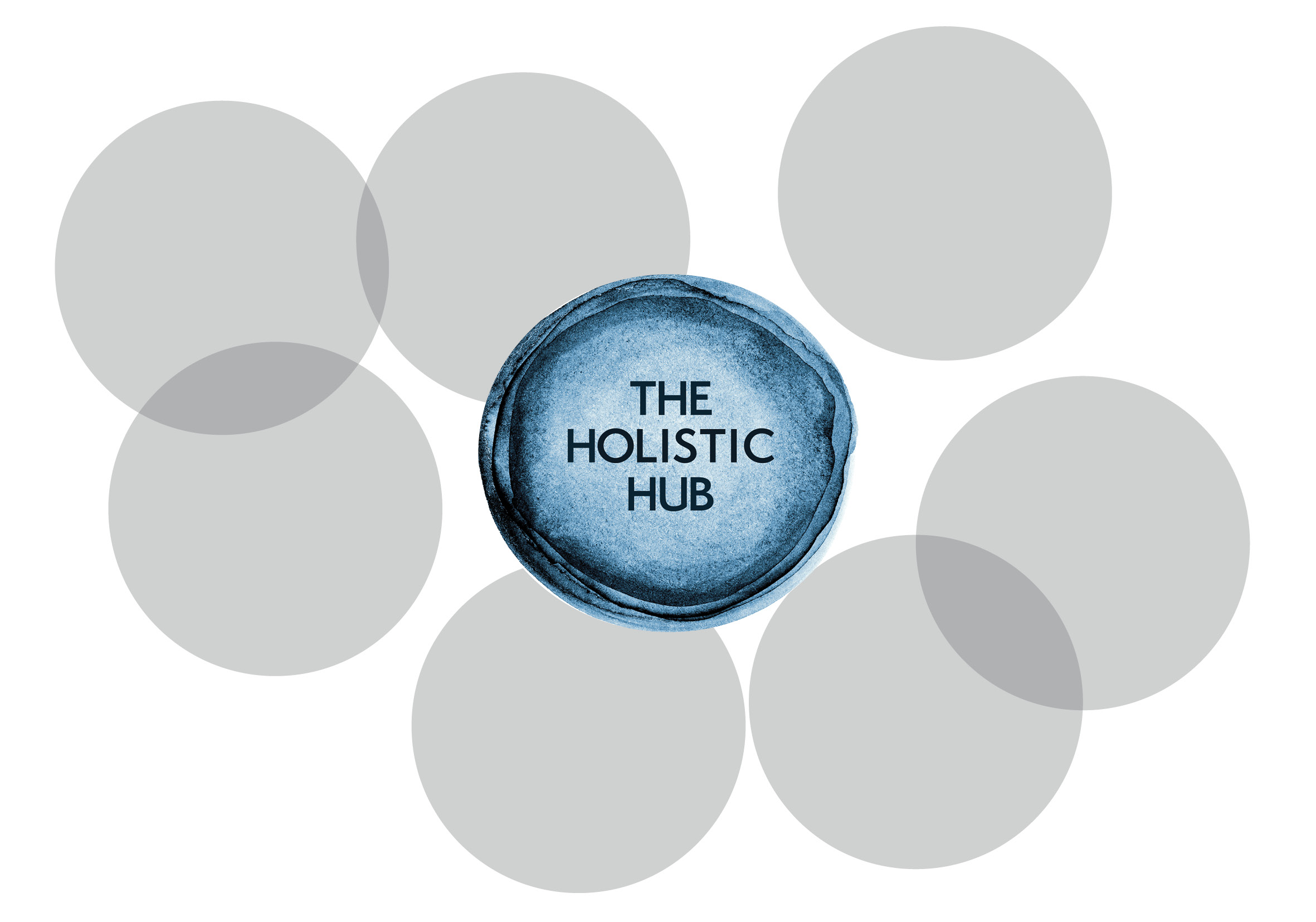
One concept, one logo and 7 logos to make it happen.
Kelly Allison, a client and life changer extraordinaire, decided to expand her holistic health business by first buying a fabulous building to house her own practice and then attracting other successful holistic health collaborators.
Most of us are familiar with the adage for success ‘surround yourself with successful people’ so Kelly found herself in the midst of 6 pretty powerful women well established in their field of expertise.
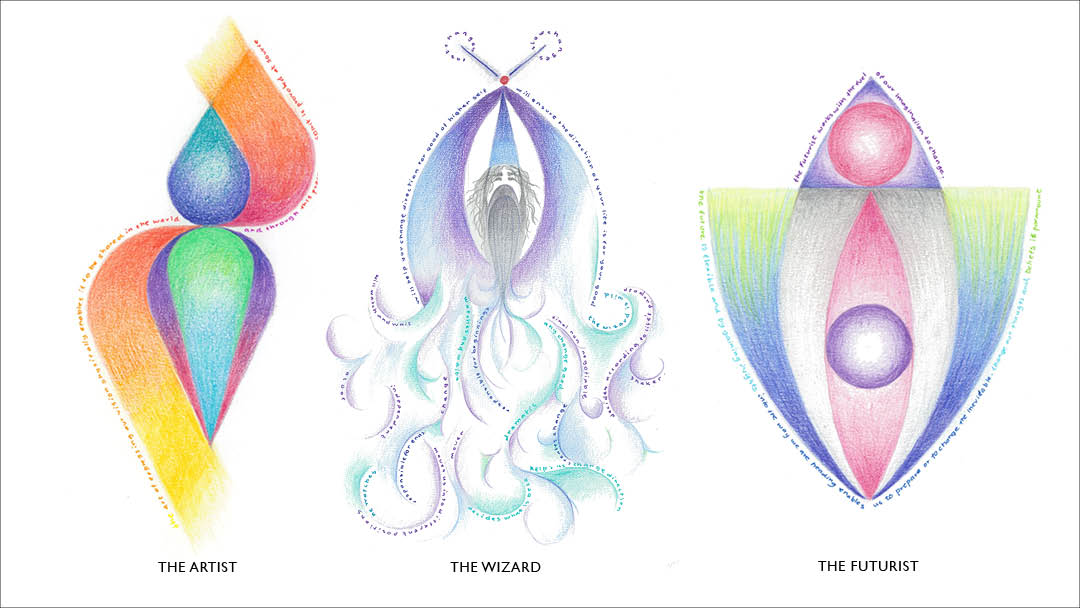
They were not going to give up their brand identities, expressed in their logos, so I worked with Kelly to mutually craft and detail a logo, one she had envisioned from the start of her concept, which was designed to represent everyone.
On one hand it was important to give each individual business free rein to express what it did best, and display that accordingly in the goodwill of their logo, on the other hand we had to effectively manage the resulting visual brand to satisfy potentially conflicting tastes. With each of the businesses based in the less conventional field of holistic health, everyone was open to a specially created event where we shared deeply the dynamics, the back room energy, of each logo.
By focussing on the embedded design intention, beyond the actual physical designs, we were able to tune into, and sense, each logo via a range of intuitively based practices. By engaging our creative, right, brains in this non-contentious way we avoided a conflict of personal tastes and communicated in a space that held the best intention for the group as well as the individuals that formed it. The results were well received and productive.
We were able to reach a depth of information, that is not available to our logical, analytical mind, and liaise with the unseen but effective dynamics, the frequency, of each logo to ensure each would work with the whole.
While this style of collaboration, engaging the logos as ‘participants’, worked effectively with the holistic style of the businesses, the approach can benefit any business. For a start it guides our connection to our intuition and personally I think this is imperative for success. Nothing exists in isolation and the use of intuition is publicly condoned by many successful business people from Warren Buffet to Richard Branson.
Using the logo in this helps us negotiate the divide between our future intention and the actions we take in the present.
I talk more about how you can develop this for you personally in my Thinkific course ‘Future Magnets: Identify and create the life you want’ available here: https://bit.ly/4ayC3rv
And if you live in Melbourne and want to know more about the venture Kelly is developing, Google ‘Holistic Hub Middle Park’.
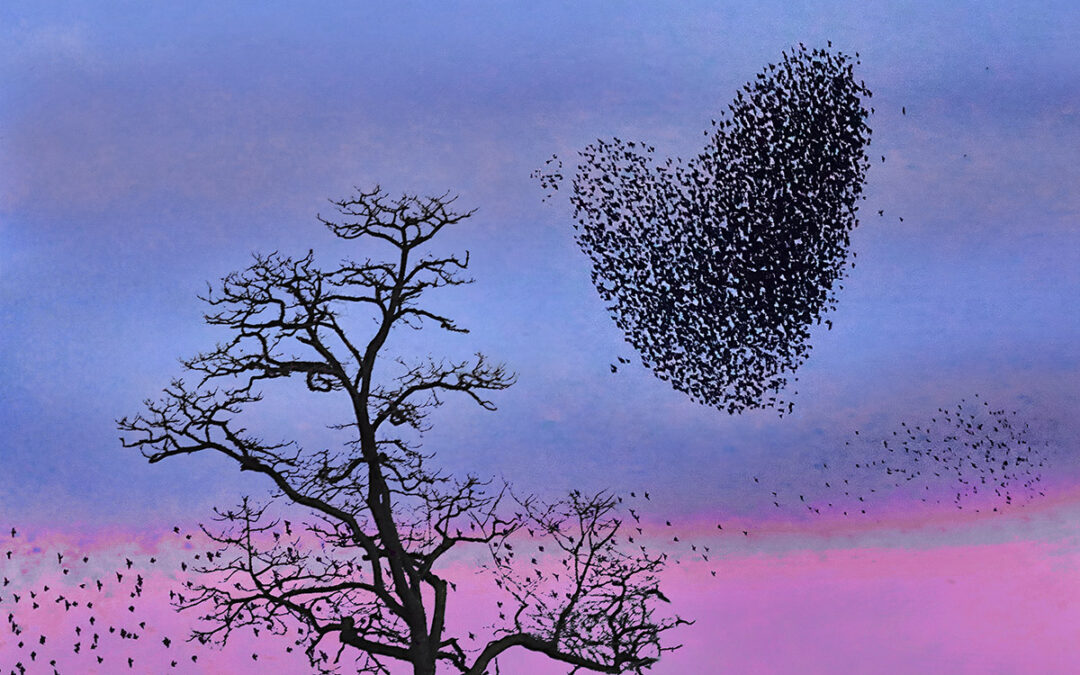
 I am moved by starling murmurations because, to me, they symbolise a new form of leadership. Together they make perpetually changing shapes that entrance us around the world.
Starling’s Murmurs ‘Chat with Annie Pearson on logos’
 In this podcast, Annie asks me about logos and I talk to her about starlings, leadership, what I got up to during Covid and how it’s time we each expressed our own visions.
Starling’s Murmurs ‘Chat with Louise Karch, author of Word Glue’
In this podcast, I chat with Louise about how words are interesting as we can both see and hear them so they can inform us at many levels, consciously and unconsciously.
Starling’s Murmurs ‘Looking inside for our truth’
In this podcast, I explain how, from sourcing inside ourselves, we can express our dreams and visions, and enable their presence in our life by using the same tools as brands.
Starling’s Murmurs ‘Delivering our logo for success’
In this podcast, I describe how attention, ceremony and ritual can all help build the intention behind the design of the logo.
Starling’s Murmurs ‘The effect of logos on us’
In this podcast, I explain why I intuitively feel that there is so much more to the intention behind logos that we must pay attention to for our own wellbeing.
Starling’s Murmurs ‘Engaging the power of logos’
In this podcast, I explain why logos can be so powerful in delivering an intention to gain the response we want to see.
Starling’s Murmurs ‘The value of the elements in the final design’
In this podcast, I look at how the choice, intention and position of every element in the final design makes a difference to the final effect.
Related posts:
Can our logos talk to us?
I bought a prestigious-branded jumper a few years ago. It was in a sale; I saved myself a few hundred pounds. In retrospect, the reduced price was still extremely high compared to what I usually spend on a jumper. They usually go bobbly after a few wears, whatever the price, and it was not quite the right shade of pink that I love. But it was a famous brand so I felt good because the purchase met my aspirations to reputedly, at least, excellent design and, with a Scottish mother, I had made a good deal, it was a bargain….or was it?
The feeling was short lived. I hardly wore it, it was the wrong colour and that compromise was enough to niggle each time I wore it. The good feelings were soon replaced by irritation and self-admonishment. At the time it felt right. I felt good. I was in the mood to buy and I responded to the emotional nudges. Who was nudging?
The emotional pull is powerfuI and comes from myriad sources. Like many, I try to do my best for the Earth and have like-minded friends who aspire to, or own, an electric or hybrid car. They are expensive and at least one expert has pointed out that the carbon footprint of hybrid cars is so great it cannot be offset during its normal lifetime. My friends all had decent, functional cars to start with but ditched these, potentially adding their unrecyclable and toxic components to the growing landfill problem. I don’t know the statistics but the latter never comes into the equation once the desire to own the new version kicks in.
What actually prompts our decision to buy? We certainly do not need most of the stuff we do purchase but we are easily convinced we want it. We are prompted by brands to believe our life will improve if we buy (or get worse if we don’t), we will be seen in a better light by those around us, we get a ‘hit’ from the feel good purchase or are creating a better life/society/planet.
Are we being tempted to express our real selves or be something we are not? Sigmund Freud’s nephew, Edward Louis Bernays (1891–1995), believed most of us were incapable of making rational decisions and so he created PR to drive our desires. One of his first campaigns was aimed at getting women to smoke when it was socially unacceptable, and women felt suppressed. He consulted a psychoanalyst and rebranded cigarettes to be appealing by organising a group of women to smoke ‘torches of freedom’ publicly, and it worked [1]. He took his skills further to help win elections.
Eventually, we become so entrained that a glimpse of a logo can remind us of the promise behind the brand it identifies. Our brain cells have been shown to fire in a unique and identifiable sequence as they respond to different logo designs. Our emotions are a powerful interface between the world that is within ourselves and the one that exists outside us. How we express ourselves affects our future as does the reverse – how we react to outside expressions of intent.
The good news in this, hopefully, is when we realise how fickle our emotional response is. We can learn to be observant and more detached from the pull of someone else’s vision and begin to express and create our own using the same branding tools.
[1] Edward Louis Bernays quoted in Larry Tye, The Father of Spin: Edward L. Bernays & The Birth of Public Relations (Henry Holt and Company, LLC: New York, 1998), pp. 39–42.
[i] Edward Louis Bernays quoted in Larry Tye, The Father of Spin: Edward L. Bernays & The Birth of Public Relations (Henry Holt and Company, LLC: New York, 1998), pp. 39–42.
Starling’s Murmurs ‘Chat with Annie Pearson on logos’
In this podcast, Annie asks me about logos and I talk to her about starlings, leadership, what I got up to during Covid and how it’s time we each expressed our own visions.
Starling’s Murmurs ‘Chat with Louise Karch, author of Word Glue’
In this podcast, I chat with Louise about how words are interesting as we can both see and hear them so they can inform us at many levels, consciously and unconsciously.
Starling’s Murmurs ‘Looking inside for our truth’
In this podcast, I explain how, from sourcing inside ourselves, we can express our dreams and visions, and enable their presence in our life by using the same tools as brands.
Starling’s Murmurs ‘Delivering our logo for success’
In this podcast, I describe how attention, ceremony and ritual can all help build the intention behind the design of the logo.
Starling’s Murmurs ‘The effect of logos on us’
In this podcast, I explain why I intuitively feel that there is so much more to the intention behind logos that we must pay attention to for our own wellbeing.
Starling’s Murmurs ‘Engaging the power of logos’
In this podcast, I explain why logos can be so powerful in delivering an intention to gain the response we want to see.
Starling’s Murmurs ‘The value of the elements in the final design’
In this podcast, I look at how the choice, intention and position of every element in the final design makes a difference to the final effect.