
Loving the gap
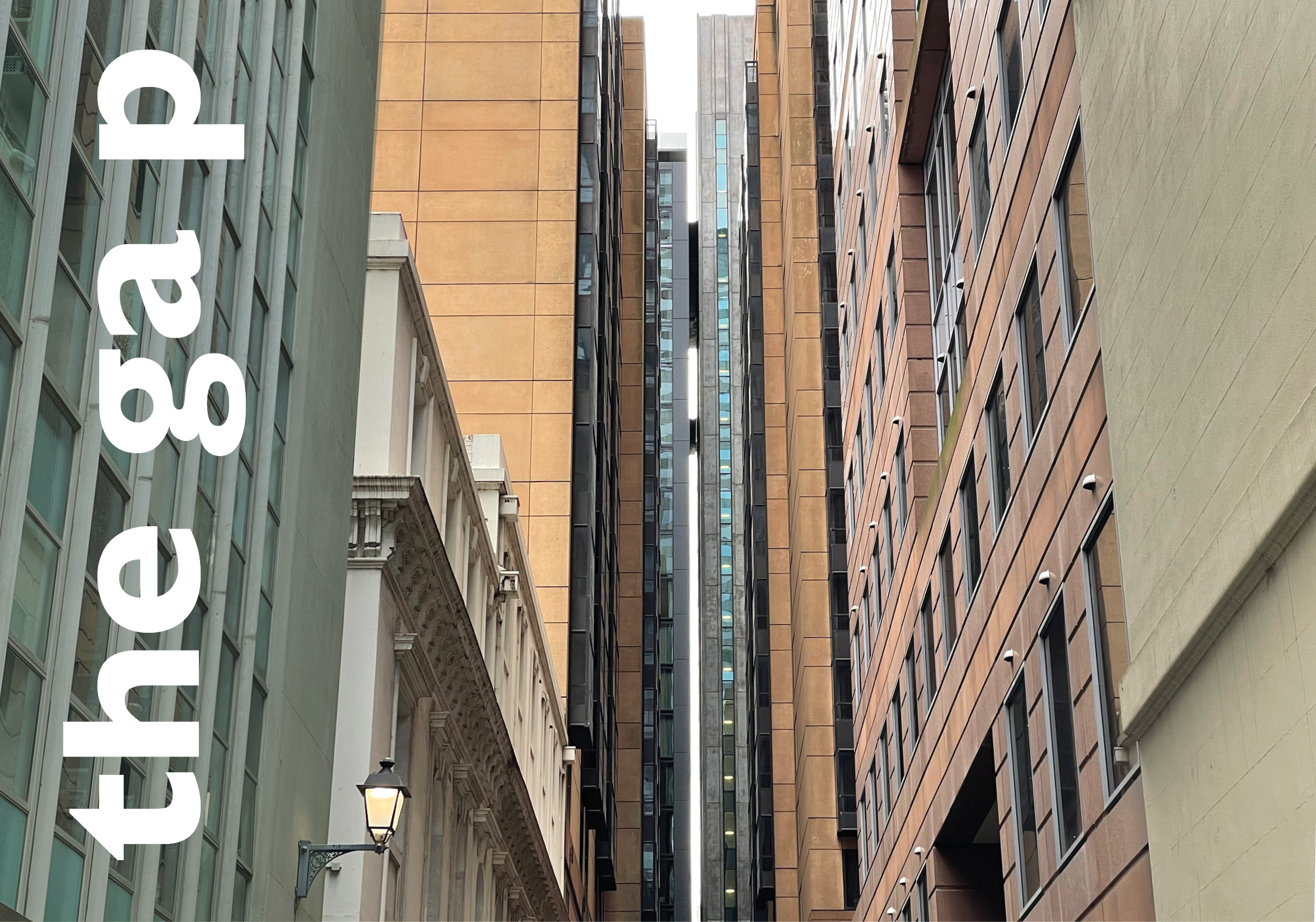
I took this photo in Melbourne when I found myself alone in town when a friend suddenly could not make the movie we had planned to see.
On my own, and in a rather grumpy state of mind, I noted this extraordinary, precise gap between buildings. I mused that it is only through the gap we reach new places. Gaps enable a space for adventure; we can explore free will because there is nothing to obstruct our potential. Conversely the gap could not exist with boundaries, in this case the buildings. But unlike the solid buildings that have been painstakingly designed and created, the space for opportunity is in the gap. We register unconsciously, but this does not diminish the power of its potential.
Without gaps there would be no between, and no change. In the gap we can create the space we want.
As a designer brought up in an age where letterspacing was carefully considered, I was taught to measure each letter space against those either side so the eye would find it pleasing. We are hardwired to note these considerations of good design, even if we are not trained in typographic layout. Without this care, our unconscious minds register that something is ‘wrong’ and we just won’t feel as comfortable with the subject matter.
I write on the importance of this and how to consider it in my course on how to create logos to design the life space we want. You can find out more about Future Magnets: Identify and attract the life you want on Thinkific here: https://bit.ly/47ZFiaR



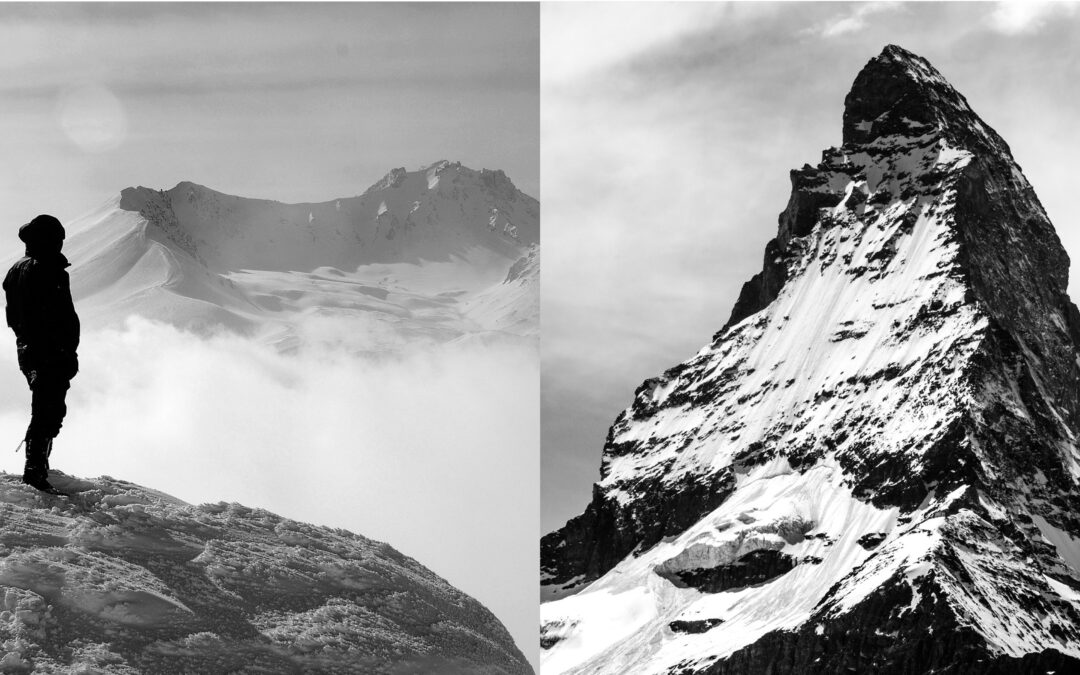
Discovering the You in You
 Who do you want to be? Who are you? Are you happy with your life? Want to live different life? There are a plethora of self-help courses at the moment, all eager to answer and supply us with solutions to a better life.
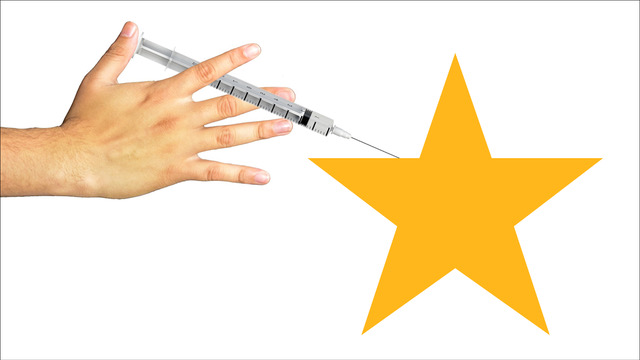
Would a celebrity convince you to be vaccinated?
What’s the difference between Elvis, Joe Biden and Sir Ian McKellen? Joe Biden is the only non-celebrity to be publicly vaccinated as an incentive.
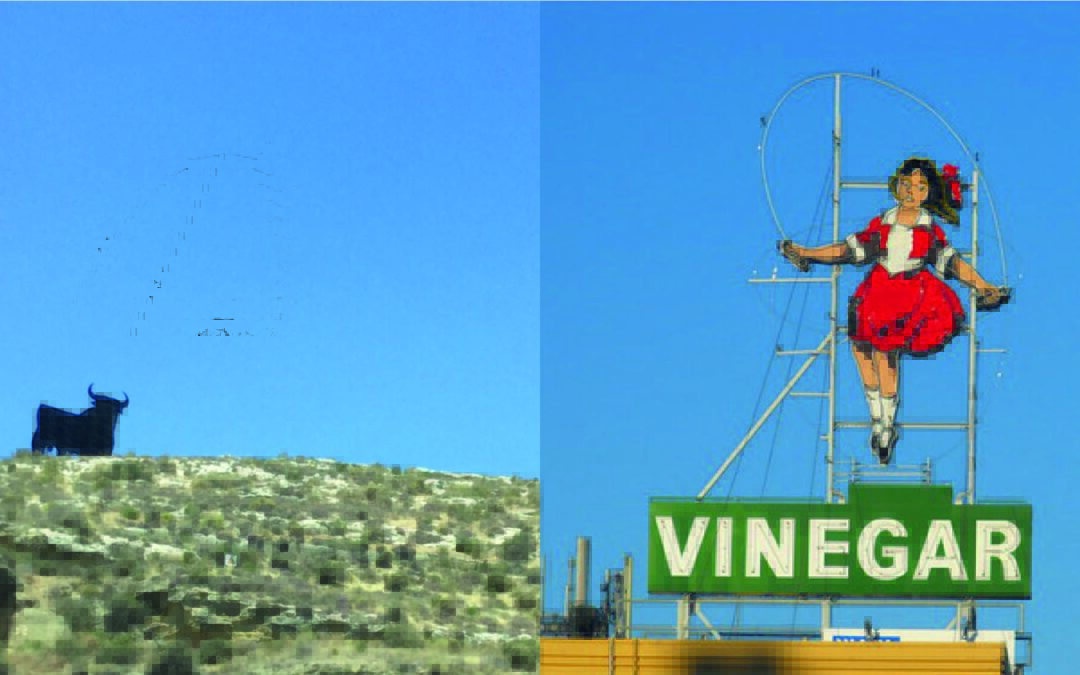
Does size matter?
There’s a lot of consideration that goes into the size of a logo. As designers we might argue that small could be better, especially when surrounded by white space.

Leaving a legacy
When we express our vision in a logo, detailed in every aspect including the colour, symbols, name and strapline we not only expedite this sharing, we leave a design, embedded with our vision, that will live on long after we are gone.
Loving the gap
I bought a prestigious-branded jumper a few years ago. It was in a sale; I saved myself a few hundred pounds. In retrospect, the reduced price was still extremely high compared to what I usually spend on a jumper. They usually go bobbly after a few wears, whatever the price, and it was not quite the right shade of pink that I love. But it was a famous brand so I felt good because the purchase met my aspirations to reputedly, at least, excellent design and, with a Scottish mother, I had made a good deal, it was a bargain….or was it?
The feeling was short lived. I hardly wore it, it was the wrong colour and that compromise was enough to niggle each time I wore it. The good feelings were soon replaced by irritation and self-admonishment. At the time it felt right. I felt good. I was in the mood to buy and I responded to the emotional nudges. Who was nudging?
The emotional pull is powerfuI and comes from myriad sources. Like many, I try to do my best for the Earth and have like-minded friends who aspire to, or own, an electric or hybrid car. They are expensive and at least one expert has pointed out that the carbon footprint of hybrid cars is so great it cannot be offset during its normal lifetime. My friends all had decent, functional cars to start with but ditched these, potentially adding their unrecyclable and toxic components to the growing landfill problem. I don’t know the statistics but the latter never comes into the equation once the desire to own the new version kicks in.
What actually prompts our decision to buy? We certainly do not need most of the stuff we do purchase but we are easily convinced we want it. We are prompted by brands to believe our life will improve if we buy (or get worse if we don’t), we will be seen in a better light by those around us, we get a ‘hit’ from the feel good purchase or are creating a better life/society/planet.
Are we being tempted to express our real selves or be something we are not? Sigmund Freud’s nephew, Edward Louis Bernays (1891–1995), believed most of us were incapable of making rational decisions and so he created PR to drive our desires. One of his first campaigns was aimed at getting women to smoke when it was socially unacceptable, and women felt suppressed. He consulted a psychoanalyst and rebranded cigarettes to be appealing by organising a group of women to smoke ‘torches of freedom’ publicly, and it worked [1]. He took his skills further to help win elections.
Eventually, we become so entrained that a glimpse of a logo can remind us of the promise behind the brand it identifies. Our brain cells have been shown to fire in a unique and identifiable sequence as they respond to different logo designs. Our emotions are a powerful interface between the world that is within ourselves and the one that exists outside us. How we express ourselves affects our future as does the reverse – how we react to outside expressions of intent.
The good news in this, hopefully, is when we realise how fickle our emotional response is. We can learn to be observant and more detached from the pull of someone else’s vision and begin to express and create our own using the same branding tools.
[1] Edward Louis Bernays quoted in Larry Tye, The Father of Spin: Edward L. Bernays & The Birth of Public Relations (Henry Holt and Company, LLC: New York, 1998), pp. 39–42.
[i] Edward Louis Bernays quoted in Larry Tye, The Father of Spin: Edward L. Bernays & The Birth of Public Relations (Henry Holt and Company, LLC: New York, 1998), pp. 39–42.
Discovering the You in You
Who do you want to be? Who are you? Are you happy with your life? Want to live different life? There are a plethora of self-help courses at the moment, all eager to answer and supply us with solutions to a better life.
Would a celebrity convince you to be vaccinated?
What’s the difference between Elvis, Joe Biden and Sir Ian McKellen? Joe Biden is the only non-celebrity to be publicly vaccinated as an incentive.
Does size matter?
There’s a lot of consideration that goes into the size of a logo. As designers we might argue that small could be better, especially when surrounded by white space.
Leaving a legacy
When we express our vision in a logo, detailed in every aspect including the colour, symbols, name and strapline we not only expedite this sharing, we leave a design, embedded with our vision, that will live on long after we are gone.