Logos are bridges. Do we want to cross?
I regularly speak about how important it is that our logos are designed to create bridges to reach those required to create our success. It is not enough to make a design based on the limitations of our personal preferences, for instance, because pink is our favourite colour, we love unicorns, or we fancy a logo we once saw on a van. The receiver on the other side of the bridge must respond ‘I want that’ and step towards us.
Successful brands know this and build their designs with blocks of carefully selected values.
Whether a logo is designed to attract a chosen vision for an individual or create profit for a large brand, with the plethora of existing logos and the maze of attributed values, it can be a delicate bridge to construct and it needs to be as robust as possible.
If we are designing a logo for a specific outcome it can be helpful and informative to imagine ourselves as the receiver. What would invite us to step on the bridge and engage with the vision? To do this effectively we need to reach into our unconscious, where 95% of our decisions are made*, and bypass our personal design preferences. It is a good place to go when we are deciding on the delivery of our logo, and it is also helpful when we are deciding whether to engage with another’s vision, to imagine ourselves at the other end of the bridge, as a receiver. How do we feel? Do we want to take that step towards engagement? This can really help us to make authentic decisions about what brands we buy into.
There are some tempting products to buy and it’s good to remember that often, a brand’s main objective is to make money. Even if it’s not a main driving factor, financial success is a powerful confirmation we are getting something right.
Big brands have a driving ambition to create share value, and the shareholders are not necessarily their customers. Shareholders can want profit to the point they could be tempted to turn a blind eye to negative environmental or health issues. Customers, who make the profit possible, may be demanding the opposite. Each could be attracted by a different bridge.
I believe we are becoming more aware, waking up to be more discerning and even refusing to step onto certain bridges. If we are designing our own logo, we are learning to consider success beyond the imbalance we have created by seeking financial gain at all costs. Both these aspects can be delivered in branding, expressed in the logo. By growing this awareness we can begin to create a mutually beneficial result and create positive change by both being discerning in both what we buy and what we deliver. Creating and engaging with logos embedded with integrity, caring and honesty can deliver the change we want to see.
When we find ourselves attracted to a brand, we can check into our subconscious through our response to the logo. Beyond the pull of the more instant gratification response, we can ask whether it is delivering the values we want to buy into and to increase in our lives.
When we take responsibility for expressing and delivering our own vision in a logo of our design, we can ensure that we are embedding our designs with the values we want to see grow in our lives and the world.
Whatever side of the bridge we stand, it is time to be vigilant and ensure we are co-creating the future we want.
Understand the power of intentional logo designs as Future Magnets to attract the life you desire in my Future Magnets course: https://bit.ly/4enPTPQ
*Harvard Business School professor Gerald Zaltman says that 95 percent of our purchase decision making takes place in the subconscious mind https://hbswk.hbs.edu/item/the-subconscious-mind-of-the-consumer-and-how-to-reach-it
What stories are we creating for our future?
 Right now, the dominant stories circling the globe are alarming, not only because they are new but because they threaten to dismantle the familiar structures we rely on.
Whose mask is it?
Logos express and deliver powerfully our intentions, and they, like ball games, unite and divide us.
Team You
Logos express and deliver powerfully our intentions, and they, like ball games, unite and divide us.

Is your logo just a facade?
Can logos be a ‘facade’, created to invite us to enter but when we open the door does the reality meet our expectations to fully engage?
The power of Pluto. The other one.
I don’t really follow astrology that much, but there has been a buzz around the movement of Pluto (the planet) into Aquarius on 19th November 2024.
Being seen
Good designers ‘see’ their clients and enable them to realise their potential and to ‘see’ their future from a new, clear and achievable standpoint.


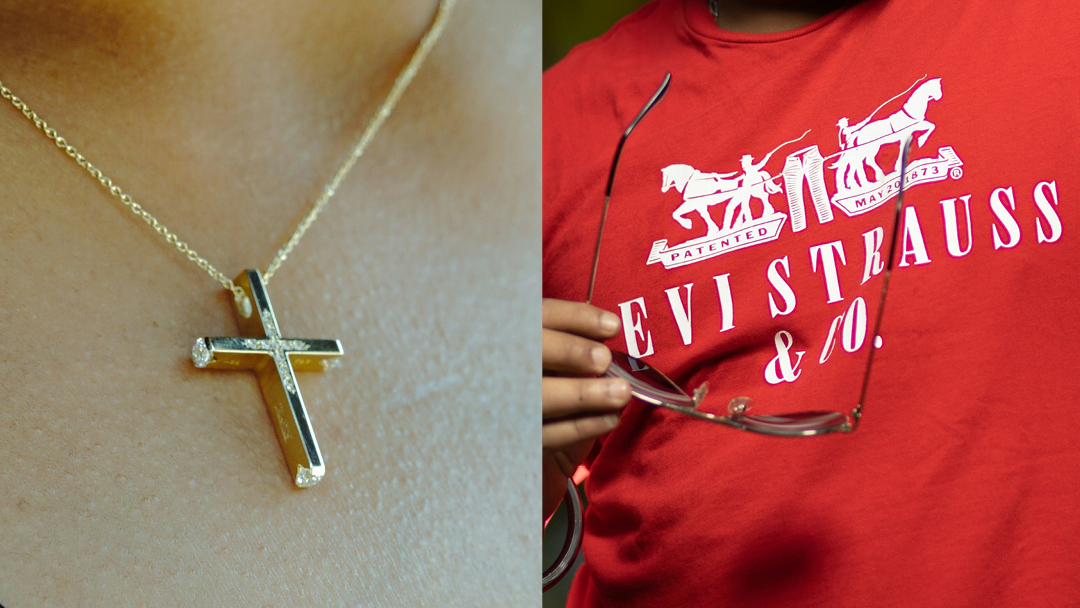
Logos are bridges. Do we want to cross?
I bought a prestigious-branded jumper a few years ago. It was in a sale; I saved myself a few hundred pounds. In retrospect, the reduced price was still extremely high compared to what I usually spend on a jumper. They usually go bobbly after a few wears, whatever the price, and it was not quite the right shade of pink that I love. But it was a famous brand so I felt good because the purchase met my aspirations to reputedly, at least, excellent design and, with a Scottish mother, I had made a good deal, it was a bargain….or was it?
The feeling was short lived. I hardly wore it, it was the wrong colour and that compromise was enough to niggle each time I wore it. The good feelings were soon replaced by irritation and self-admonishment. At the time it felt right. I felt good. I was in the mood to buy and I responded to the emotional nudges. Who was nudging?
The emotional pull is powerfuI and comes from myriad sources. Like many, I try to do my best for the Earth and have like-minded friends who aspire to, or own, an electric or hybrid car. They are expensive and at least one expert has pointed out that the carbon footprint of hybrid cars is so great it cannot be offset during its normal lifetime. My friends all had decent, functional cars to start with but ditched these, potentially adding their unrecyclable and toxic components to the growing landfill problem. I don’t know the statistics but the latter never comes into the equation once the desire to own the new version kicks in.
What actually prompts our decision to buy? We certainly do not need most of the stuff we do purchase but we are easily convinced we want it. We are prompted by brands to believe our life will improve if we buy (or get worse if we don’t), we will be seen in a better light by those around us, we get a ‘hit’ from the feel good purchase or are creating a better life/society/planet.
Are we being tempted to express our real selves or be something we are not? Sigmund Freud’s nephew, Edward Louis Bernays (1891–1995), believed most of us were incapable of making rational decisions and so he created PR to drive our desires. One of his first campaigns was aimed at getting women to smoke when it was socially unacceptable, and women felt suppressed. He consulted a psychoanalyst and rebranded cigarettes to be appealing by organising a group of women to smoke ‘torches of freedom’ publicly, and it worked [1]. He took his skills further to help win elections.
Eventually, we become so entrained that a glimpse of a logo can remind us of the promise behind the brand it identifies. Our brain cells have been shown to fire in a unique and identifiable sequence as they respond to different logo designs. Our emotions are a powerful interface between the world that is within ourselves and the one that exists outside us. How we express ourselves affects our future as does the reverse – how we react to outside expressions of intent.
The good news in this, hopefully, is when we realise how fickle our emotional response is. We can learn to be observant and more detached from the pull of someone else’s vision and begin to express and create our own using the same branding tools.
[1] Edward Louis Bernays quoted in Larry Tye, The Father of Spin: Edward L. Bernays & The Birth of Public Relations (Henry Holt and Company, LLC: New York, 1998), pp. 39–42.
[i] Edward Louis Bernays quoted in Larry Tye, The Father of Spin: Edward L. Bernays & The Birth of Public Relations (Henry Holt and Company, LLC: New York, 1998), pp. 39–42.
What stories are we creating for our future?
Right now, the dominant stories circling the globe are alarming, not only because they are new but because they threaten to dismantle the familiar structures we rely on.
Whose mask is it?
Logos express and deliver powerfully our intentions, and they, like ball games, unite and divide us.
Team You
Logos express and deliver powerfully our intentions, and they, like ball games, unite and divide us.
Is your logo just a facade?
Can logos be a ‘facade’, created to invite us to enter but when we open the door does the reality meet our expectations to fully engage?
The power of Pluto. The other one.
I don’t really follow astrology that much, but there has been a buzz around the movement of Pluto (the planet) into Aquarius on 19th November 2024.
Being seen
Good designers ‘see’ their clients and enable them to realise their potential and to ‘see’ their future from a new, clear and achievable standpoint.