Logo Potency
What different symbols and images mean and how your audience see them.
We might like the look of a logo enough to wear it, but we usually choose to display the design because of what it stands for. But do we all see logos the same and do we get the message that the brand leaders want us to? We certainly all feel differently, and may react subconsciously, when we see a triangle or a circle, red or blue, an eagle or a lion and when we hear the sound of a word, soft or clipped.
Angeles Arrien was a cultural anthropologist, award-winning author, educator, and consultant to many organisations and businesses. She wrote Signs of Life: The Five Universal Shapes and How to Use Them. She found that there are 5 symbols that exist in the art of all cultures, regardless of geographical location, and these symbols mean the same in each. The circle represents wholeness, the square signifies stability, the triangle stands for hopes and dreams, the cross refers to relationships and the spiral to growth. (These symbols are so ingrained in our psyche that she created a personality test based on the order in which participants selected them.)
Of course, designers manipulate these with different colours and mix the shapes so that we ‘get’ more than one message in a single logo.
Quantum scientists tell us our memories are held in the quantum field around us and we all participate in creating them as well as unconsciously tapping into these universal beliefs. These ‘memories’ are sometimes referred to as archetypes, a conscious agreement that we attribute the same values to a particular creation. For example, a red rose can remind us of the lover.
If abstract symbols can seem too abstract, then designers can look to the realistic world to access imagery that is more familiar, which usually comes with its own set of values, and can evoke a (hopefully) predetermined/intended, emotional response. Most of us feel warm when we see the puppy used on the Andrex toilet paper, inspired by the Lloyds Bank, or Ferrari, black horses and charmed by the Meerkats on Compare the Market advertising.
But would an indigenous American see the Eagle used to identify the USA in the same way as the later settlers? According to the Native-languages website http://www.native-languages.org/legends-eagle.htm, the meanings and power attributed to the bird vary from tribe to tribe. The Pueblo tribes associate eagles with the upward direction, and a guardian of one of the six directions, as well as spirituality and balance. The Zunis ascribe eagle feathers with healing and hunting powers, and the Eagle Dance is a very important traditional dance held by the Hopi and other Pueblo tribes. In some tribes, Eagle plays a leadership role or serves as a messenger between humans and the Creator. In many South American tribes, eagles are associated with the afterlife and can play the role of carrying deceased people’s souls to the afterworld.
What was the thinking behind the white settlers’ choice of symbol and did they, as any good shaman would, connect with the bird to liaise with it and get permission to tap into its power and values? Would an Australian indigenous person see the Kangaroo often used to depict Australia with the same values as the brand designers?
Brands such as Uncle Ben’s and Aunt Jemima are changing their names and removing their imagery of African Americans. PepsiCo is the parent company of Aunt Jemima, the image of the brand which has been long criticised as a racist caricature of a Black woman. They will replace it with the Pearl Milling Company name, (the original business that created the ready-made pancake mix).
And taking advantage of an opportunity, PepsiCo said ‘Pearl Milling Company will also announce an annual $1 million commitment to empower and uplift Black girls and women in the coming weeks. This investment is in addition to PepsiCo’s $400 million, five-year commitment to advance and uplift the Black community.’ This, of course, could help us to see the brand differently.
Mars Food, owners of Uncle Ben’s rice, also announced it would remove the image of a smiling, grey-haired black man from its packaging and rename the rice products to Ben’s Original. Did Black Americans see this imagery differently to White Americans? And will we perceive the product differently without the imagery?
Brands, of course, want us all to see the same values in their logo designs. Symbols and imagery are one of the main pillars of brand design and a brand’s success depends on favourable and united reactions.
Whose design is it anyway?
 When I was asked to write about design trends for 2020, my immediate response was to delve into my many years of design experience, observe any cycles, for example in colour, typography, shapes and so on …
VW Logo, Love it or Hate it
I met a girl with a VW logo on her foot and she answered, when I questioned why, that she loved her VW. I wonder if her love faded when she learned that VW had fitted 11m cars worldwide with software …
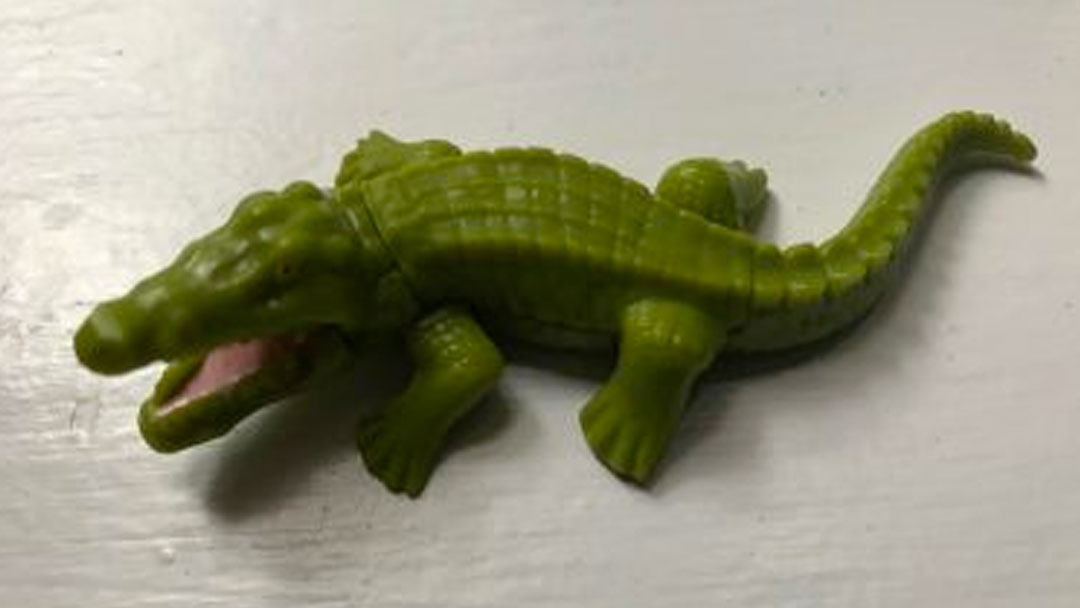
Who owns the crocodile?
Lacoste and Crocodile International became locked into battle in New Zealand when they both wanted to use the crocodile to identify their brand. Their crocodiles look fairly similar but Lacoste’s …
What blocks us?
 Sometimes making choices about the direction of our lives is not easy. Through a logo design we can clarity our intention and pave the way to the future we want …
Can logos make us rich?
We buy because the logo identifies what we want. But often the value lies in the logo and this is a tool we can all use.
Finding your purpose
When we work with the design of a logo we start to hone the purpose it will eventually represent.
How can we leave our mark on the world?
As we move through life, logos remain like footprints expressing and sharing our intentions in the moment.

Managing change
The world is full of change. Everything seems to be in transition and we don’t know who to trust. If we learn to trust ourselves and express this in a logo it can give us an anchor and help to manage the change…
Fashion Karma
Can your clothes transfer their energy to you? Whether it is the conditions under which they are created, the materials used or the logo imprinted on them, some knowledge of these aspects might help us …
The spirit of Coke
The American character, Hector Dexter, in Nancy Mitford’s 1951 satire “The Blessing” refers to Coca-Cola thus: “When I say a bottle of Coca-Cola I mean it metaphorically speaking …
Logo Potency
What is most important, people or the planet? The Earth can survive very well without us, probably better than it is right now, but we cannot survive without the Earth.
Only so many of us can fit on Elon’s spaceship, and then, do we really want to transport the mindsets that got Earth into its current polluted state onto a pristine planet?
Since the 1950s, some believe the start of the industrial age, we have entered the Anthropocene age. This is based on the assumption that, for the first time, we have ushered in a new epoch by altering the earth.
The Smithsonian says: “humankind has caused mass extinctions of plant and animal species, polluted the oceans and altered the atmosphere, among other lasting impacts.”
Who is to blame? How have we been tempted to ignore Mother Earth when she has sustained and nourished our human lives for hundreds of thousands of years? And the result we are harvesting from this ignorance is the creation of an environment that not only ceases to support our health and well-being but becomes toxic and unsustainable to our own lives.
Brands are expert in creating our future dreams for us. John Perkins, shaman and ex economic hit man, tells us we need to change our dream. He labels our current economy as a death economy. And our economy is in direct opposition to our planetary health. Economists bemoan the fall in population (consumers are required for growth); environmentalists state there are too many people in the world.
Without a deep connection to nature, we will fail in both.
Paula Gunn Allen, a Native American poet, activist, scholar and novelist, explains:
“We are the land… that is the fundamental idea embedded in Native American life… the Earth is the mind of the people as we are the mind of the earth. The land is not really the place (separate from ourselves) where we act out the drama of our isolate destinies… It is rather a part of our being, dynamic, significant, real. It is our self… It is not a matter of being ‘close to nature’… The Earth is, in a very real sense, the same as our self (or selves)…”
Our current economy depends on increasing consumption, and brands are exemplary in helping us part with our money for goods we really don’t need but must have. Brands promote luxury goods to the rich and tempt the poor with products they can ill-afford and may harm, such as tobacco. Much of the time, sourcing and creating the raw materials threatens the balance of nature, which is further jeopardised during the manufacturing processes and this can also damage the well-being of the workers involved.
It really is an incredible power that brands hold over us. While knowing all this, we continue to buy into the marketing promise. But we can learn from brands’ successes and use them to help create our own. Brands are excellent in creating tribes for us to belong to. It’s a primal urge to belong. Are we an Audi driver? A Levis’ wearer? A Mac user? What do we aspire to? How can we connect back to our own, true, deep, inner longings and aspire to our incarnated uniqueness, which we can express to the world using our own, proven successful, branding techniques?
We can and must create a new tribe of tribes, tribes with values that connect us to others ready to change their future, to promote a better, sustainable world. Using our own specially designed future magnets (logos), we can attract like-minded people who care about the planet, about nature, including the plants and animals, and about ensuring the best for future generations rather than profit now. Brands helped us get into this mess; the techniques they have honed can help us get out of it and heal. Nothing unites us more than a logo that invites us to share a single intention.
Indigenous people know this and when they become disconnected from their tribe they experience a terrible loneliness that ‘could only be healed through interrelationships and participation in meaningful ceremonies with the whole tribe’. (O’Nell 2004).
Building relationships, ceremony, ritual and participation are all brand tools, it is our ability and responsibility to create our own, those that are meaningful and nurture us and our world.
‘Deep planetary changes and environmental destruction are necessitating healing at individual, community and global scales. Feelings of pain, suffering, fear, anger and grief for those directly affected by climate change or those watching through TV screens are real.’
‘If humanity learned from and embraced this cosmology, we would understand that our wellbeing and healing is dependent on the wellbeing and healing of the Earth and nature, and that we have reciprocal duties and responsibilities to maintain balanced relations with it. Being one with nature, rather than separate to it, helps us to break down the way we currently control and conquer nature, to our own detriment – an approach some have termed “eco-apartheid”. Wellness and healing require caring for and balancing the different parts of our “self” – the spirit, body, mind and the Earth.’
What can we design and foster for the common good? What can we invest in our own logo, one that expresses our deep longing?
Whose design is it anyway?
When I was asked to write about design trends for 2020, my immediate response was to delve into my many years of design experience, observe any cycles, for example in colour, typography, shapes and so on …
VW Logo, Love it or Hate it
I met a girl with a VW logo on her foot and she answered, when I questioned why, that she loved her VW. I wonder if her love faded when she learned that VW had fitted 11m cars worldwide with software …
Who owns the crocodile?
Lacoste and Crocodile International became locked into battle in New Zealand when they both wanted to use the crocodile to identify their brand. Their crocodiles look fairly similar but Lacoste’s …
What blocks us?
Sometimes making choices about the direction of our lives is not easy. Through a logo design we can clarity our intention and pave the way to the future we want …
Can logos make us rich?
We buy because the logo identifies what we want. But often the value lies in the logo and this is a tool we can all use.
Finding your purpose
When we work with the design of a logo we start to hone the purpose it will eventually represent.
How can we leave our mark on the world?
As we move through life, logos remain like footprints expressing and sharing our intentions in the moment.
Managing change
The world is full of change. Everything seems to be in transition and we don’t know who to trust. If we learn to trust ourselves and express this in a logo it can give us an anchor and help to manage the change…
Fashion Karma
Can your clothes transfer their energy to you? Whether it is the conditions under which they are created, the materials used or the logo imprinted on them, some knowledge of these aspects might help us …
The spirit of Coke
The American character, Hector Dexter, in Nancy Mitford’s 1951 satire “The Blessing” refers to Coca-Cola thus: “When I say a bottle of Coca-Cola I mean it metaphorically speaking …