Is just saying yes enough?

It’s a brave move to say yes to change. I remember, some years ago, many of my friends were extolling the power of Louise Hay’s affirmations, whether they were written on post-it notes stuck around the house or spoken in personal statements to oneself in the mirror. I did not give it much credibility until one day, as an experiment, and at a time where I was not feeling entirely happy with my life, I thought I would give it a go. It was hilarious. I looked at myself in the mirror, engaged my eyes and, fairly loudly, pronounced ‘I am willing to change’. It started well but my mind immediately stepped in as the implications settled and I started to add so many caveats! ‘Well, not entirely change, just some bits’, ‘well maybe not actually really change anything just clip a few bits out that aren’t pleasing me’ and so on. It was eye opening. And I have learned since that it is the role of our left, logical brain to keep us safe, in the tried and tested familiar that got us to survive to this point. It does not like change.
If you are reading this then you are alive, you are probably not hungry, or cold, or homeless, and as far as our left brain goes, it thinks it is doing ok. Why would it jeopardise its success to date by changing? It’s common to fear change in our lives; one of my favourite puns is sometimes displayed on the tip jar in cafes which cleverly taps into this. ‘Fear change? We can help. Give it to us.’
I can’t remember if my life changed for the better after my mirror exercise, it did change eventually. But the first and possibly the most important step was to address a willingness to change. It is probably the most important part of the process. Sometimes I wonder if it is enough? And once we open that door, we enable chance to enter.
I have had numerous clients who have been thoroughly enthusiastic about the ability of the logo work to create something new in their lives; they embraced the concept, and were excited to begin, but did not continue. The change happened anyway. They had said yes. One was trying to sell her apartment in the city centre. No one was coming to view it, despite it being in a popular area, and offered at a very fair price. We started exploring symbols, words and colours to begin creating an intentional logo. She got a symbol, a particular bird, and we planned to meet and continue with the rest of the elements and design. About a week later I heard from her; the apartment had sold. She had been envisioning this bird everywhere. It was enough. Another potential client sparked from a chance meeting on a train; she understood the power of the work and insisted I meet with her son who was at a critical point in his life. He was planning to leave a successful career to start his own business. His mother was intuitive and persistent and arranged for us to get together. After a good chat he agreed to work together until I had a call saying that he felt really clear that he needed to stay where he was. The mother was delighted at the outcome, maybe mothers really do know best. A third connection was established at a chance meeting during a conference. This man’s life was in a complete muddle. It needed focus and a strategy to reveal what really mattered to achieving success. One of the main criteria was earning money. As I was about to present my analysis, he said he had no time to proceed right now as an enormous and profitable project had landed on his lap.
I have felt that the universe is a fluid place, and it is not only logic that gets us from A to B. If we can open to the possibility of negotiating with this fluidity, we can enable the change we want without the struggle, the often lonely and stressful alternative path of ‘making it happen’.
What do we want to say yes to and are we willing to change?
If you want to learn how logos can help as an intermediary between our logic and creative minds, our desires and the flow of the energy that forms us and connects us all, see my Future Magnets course here: : https://bit.ly/4enPTPQ


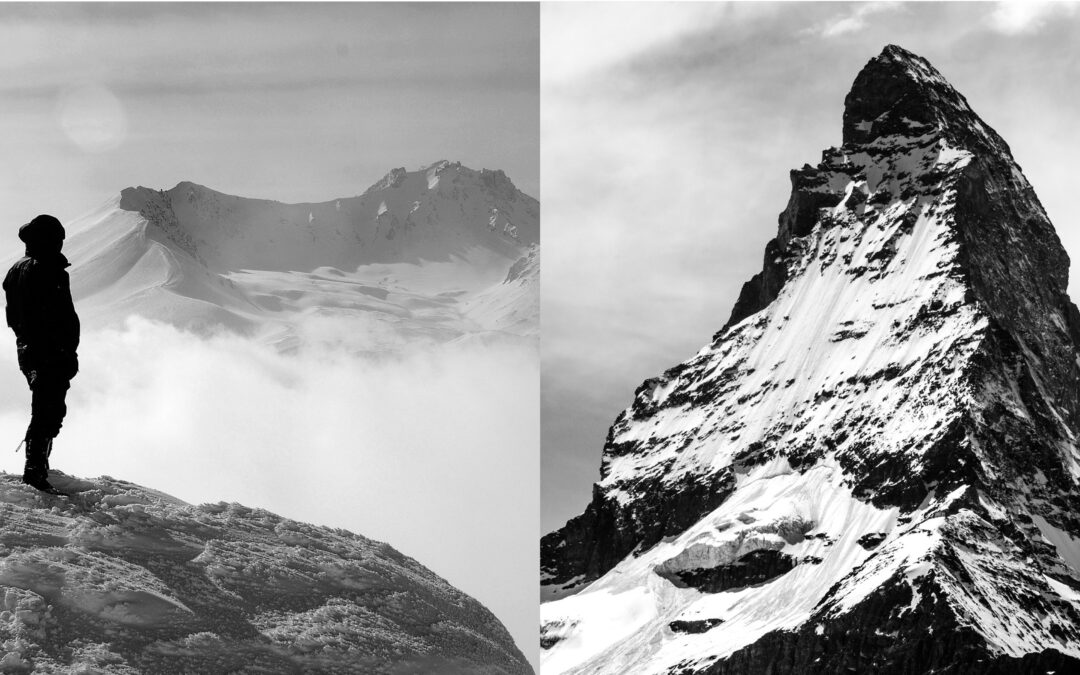
Discovering the You in You
 Who do you want to be? Who are you? Are you happy with your life? Want to live different life? There are a plethora of self-help courses at the moment, all eager to answer and supply us with solutions to a better life.
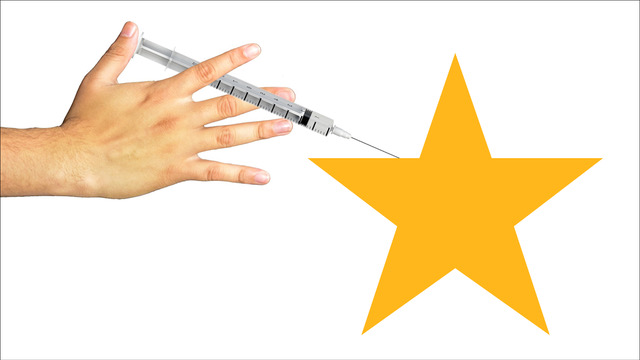
Would a celebrity convince you to be vaccinated?
What’s the difference between Elvis, Joe Biden and Sir Ian McKellen? Joe Biden is the only non-celebrity to be publicly vaccinated as an incentive.
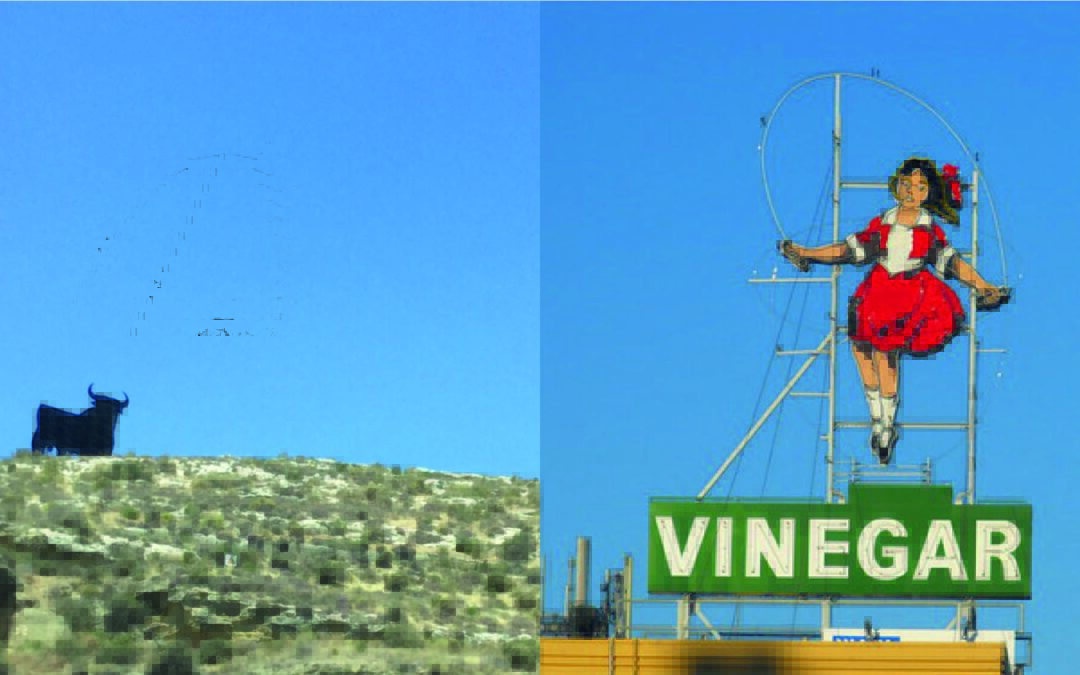
Does size matter?
There’s a lot of consideration that goes into the size of a logo. As designers we might argue that small could be better, especially when surrounded by white space.

Leaving a legacy
When we express our vision in a logo, detailed in every aspect including the colour, symbols, name and strapline we not only expedite this sharing, we leave a design, embedded with our vision, that will live on long after we are gone.
Is just saying yes enough?
I bought a prestigious-branded jumper a few years ago. It was in a sale; I saved myself a few hundred pounds. In retrospect, the reduced price was still extremely high compared to what I usually spend on a jumper. They usually go bobbly after a few wears, whatever the price, and it was not quite the right shade of pink that I love. But it was a famous brand so I felt good because the purchase met my aspirations to reputedly, at least, excellent design and, with a Scottish mother, I had made a good deal, it was a bargain….or was it?
The feeling was short lived. I hardly wore it, it was the wrong colour and that compromise was enough to niggle each time I wore it. The good feelings were soon replaced by irritation and self-admonishment. At the time it felt right. I felt good. I was in the mood to buy and I responded to the emotional nudges. Who was nudging?
The emotional pull is powerfuI and comes from myriad sources. Like many, I try to do my best for the Earth and have like-minded friends who aspire to, or own, an electric or hybrid car. They are expensive and at least one expert has pointed out that the carbon footprint of hybrid cars is so great it cannot be offset during its normal lifetime. My friends all had decent, functional cars to start with but ditched these, potentially adding their unrecyclable and toxic components to the growing landfill problem. I don’t know the statistics but the latter never comes into the equation once the desire to own the new version kicks in.
What actually prompts our decision to buy? We certainly do not need most of the stuff we do purchase but we are easily convinced we want it. We are prompted by brands to believe our life will improve if we buy (or get worse if we don’t), we will be seen in a better light by those around us, we get a ‘hit’ from the feel good purchase or are creating a better life/society/planet.
Are we being tempted to express our real selves or be something we are not? Sigmund Freud’s nephew, Edward Louis Bernays (1891–1995), believed most of us were incapable of making rational decisions and so he created PR to drive our desires. One of his first campaigns was aimed at getting women to smoke when it was socially unacceptable, and women felt suppressed. He consulted a psychoanalyst and rebranded cigarettes to be appealing by organising a group of women to smoke ‘torches of freedom’ publicly, and it worked [1]. He took his skills further to help win elections.
Eventually, we become so entrained that a glimpse of a logo can remind us of the promise behind the brand it identifies. Our brain cells have been shown to fire in a unique and identifiable sequence as they respond to different logo designs. Our emotions are a powerful interface between the world that is within ourselves and the one that exists outside us. How we express ourselves affects our future as does the reverse – how we react to outside expressions of intent.
The good news in this, hopefully, is when we realise how fickle our emotional response is. We can learn to be observant and more detached from the pull of someone else’s vision and begin to express and create our own using the same branding tools.
[1] Edward Louis Bernays quoted in Larry Tye, The Father of Spin: Edward L. Bernays & The Birth of Public Relations (Henry Holt and Company, LLC: New York, 1998), pp. 39–42.
[i] Edward Louis Bernays quoted in Larry Tye, The Father of Spin: Edward L. Bernays & The Birth of Public Relations (Henry Holt and Company, LLC: New York, 1998), pp. 39–42.
Discovering the You in You
Who do you want to be? Who are you? Are you happy with your life? Want to live different life? There are a plethora of self-help courses at the moment, all eager to answer and supply us with solutions to a better life.
Would a celebrity convince you to be vaccinated?
What’s the difference between Elvis, Joe Biden and Sir Ian McKellen? Joe Biden is the only non-celebrity to be publicly vaccinated as an incentive.
Does size matter?
There’s a lot of consideration that goes into the size of a logo. As designers we might argue that small could be better, especially when surrounded by white space.
Leaving a legacy
When we express our vision in a logo, detailed in every aspect including the colour, symbols, name and strapline we not only expedite this sharing, we leave a design, embedded with our vision, that will live on long after we are gone.